A crypto dead man’s switch hands your seed phrases to a trusted person if you become unresponsive. Most rely on check-ins, and miss a ping means the keys leak while you’re still alive. With crypto, that mistake is permanent.
$190 million, lost to a single point of failure
In December 2018, Gerald Cotten, founder of Canadian exchange QuadrigaCX, died unexpectedly while traveling in India. He was 30. He was also the only person with access to the exchange’s cold wallet keys. Roughly $190 million in customer crypto became permanently inaccessible. No recovery mechanism. No master override. No support ticket that could help.
Cotten’s case made headlines, but the underlying problem isn’t unusual. Chainalysis estimates around 3.7 million Bitcoin are lost forever, sitting in wallets that nobody can open. At current prices, that’s hundreds of billions of dollars. Some belong to early adopters who lost hard drives. Some belong to people who forgot passwords. A meaningful chunk belongs to people who are simply gone, with no one left who knows how to access their wallets. Crypto inheritance planning exists to prevent exactly this.
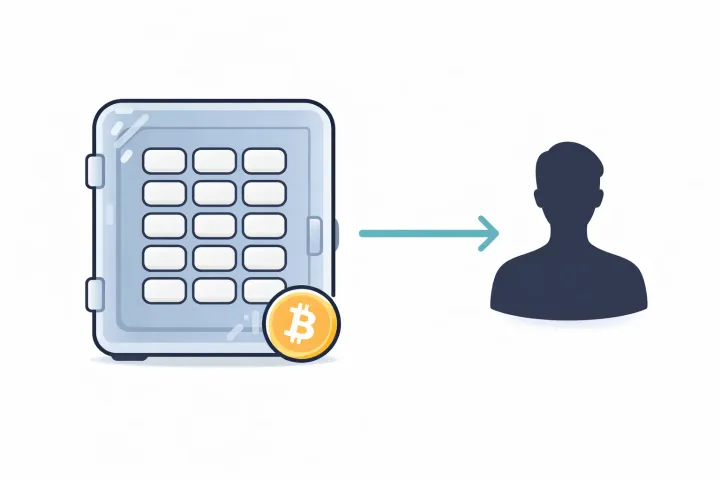
A crypto dead man’s switch keeps your holdings out of that statistic. It transfers or reveals your wallet credentials to a designated person if you become unresponsive. Set it up while you’re alive, and it sits quietly in the background until it’s needed.
The concept is straightforward. The implementation varies wildly, and the wrong choice can create more risk than it solves.
What is a crypto dead man’s switch?
The term comes from heavy machinery. Trains and industrial equipment have physical switches that require the operator to hold them down. Let go, and the machine stops. A digital dead man’s switch applies the same idea to information: stop responding, and something gets released.
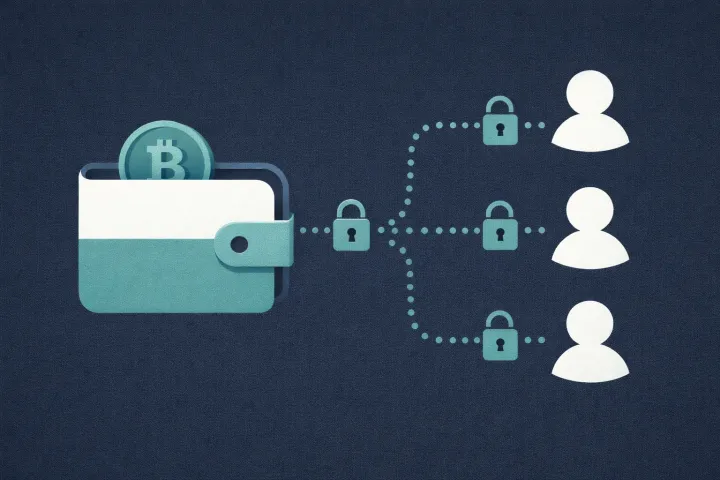
For crypto, that means storing your wallet credentials, seed phrases, exchange logins, hardware wallet PINs, 2FA backup codes, in a secure system that releases them to a designated person when you can’t do it yourself.
Two main approaches exist.
Check-in based switches ping you on a schedule. Daily, weekly, monthly. Miss the window, and the system assumes you’re incapacitated and starts releasing your stored information. Most dead man’s switch apps use this model.
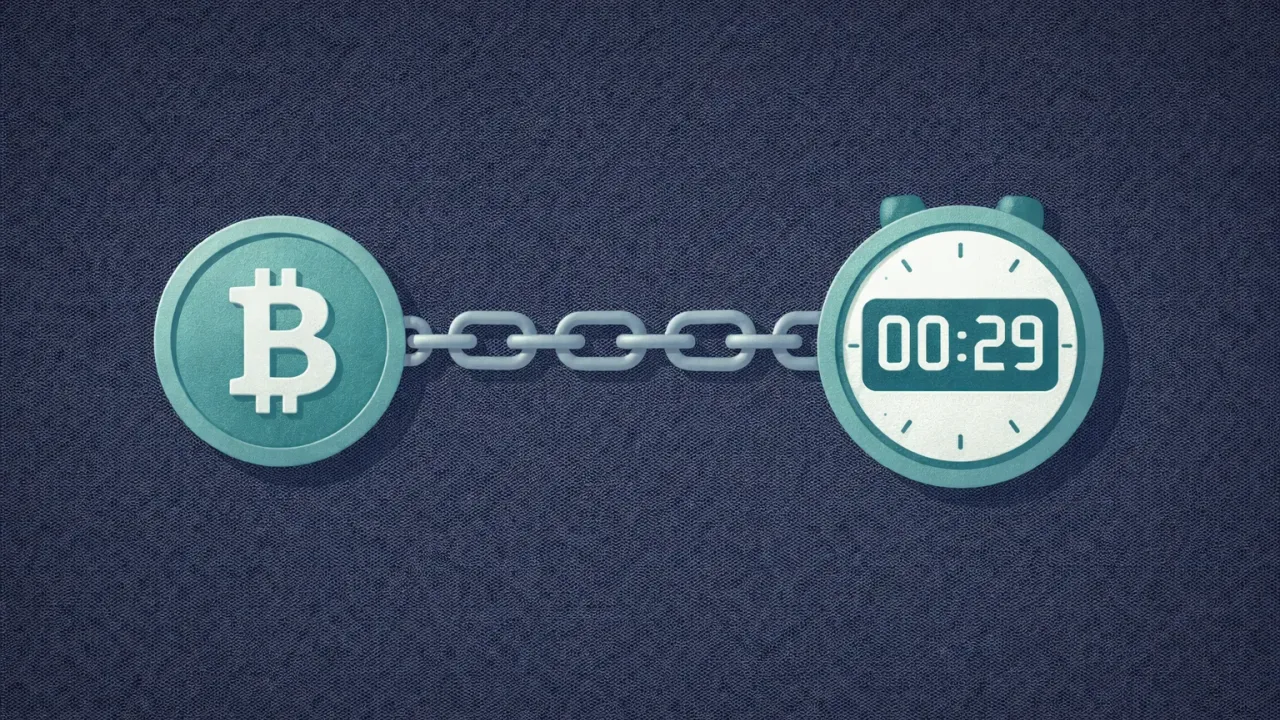
Request-based switches work in the opposite direction. Nobody gets pinged. Nothing happens until a designated person actively requests access. You then have a set window to respond. Approve, deny, or do nothing, if the timer runs out, access is granted automatically.
For crypto, the difference between these two approaches matters far more than it does for most other types of sensitive information.
When the secret is a seed phrase, any false-trigger rate is too high.
Crypto dead man’s switch options
The market ranges from blockchain-native protocols to general-purpose vault apps. Here’s what’s out there.
AbsentKey
AbsentKey is an encrypted vault for sharing passwords, files, and private info with trusted contacts. You store your seed phrases as secrets, invite recipients, and set a waiting time per person (1 to 365 days). When a recipient needs access, they request it. You can approve, deny, or do nothing. If you don’t respond before the timer runs out, they get access automatically.
The difference from everything else on this list: no check-ins. AbsentKey doesn’t ping you on any schedule. The system is completely passive until a recipient initiates a request. Encryption is zero-knowledge (XSalsa20-Poly1305 for symmetric, X25519 for key exchange). The mobile client is source-available on GitHub. Receiving is free.
Best for: crypto holders who want a request-based system with no ongoing maintenance.
Inheriti
Inheriti is the most crypto-native option available. It uses Shamir’s Secret Sharing to split your encrypted data into fragments distributed across multiple blockchain networks: VeChain, Ethereum, Optimism, Polygon, BNB, and Base. They also sell a hardware cold storage device called SafeKey.
The draw for crypto holders: your inheritance data lives on-chain, not on a single company’s servers. You’re trusting math and decentralized networks rather than a startup’s infrastructure. The approach is patented, and the architecture is noticeably different from everything else on this list.
The trade-off is complexity. You need to understand Shamir’s Secret Sharing, manage SHA tokens for on-chain transaction fees, and coordinate with heirs who’ll need to reconstruct the secret. There’s no mobile app. And despite the decentralized architecture, the dead man’s switch component still relies on check-ins.
Best for: crypto-native users comfortable with on-chain tooling.
Cipherwill
Cipherwill is a digital will platform with support for crypto assets. You store your credentials in an encrypted vault and designate beneficiaries who receive access after you die or become incapacitated. The platform monitors your activity through periodic check-ins.
It’s web-only, with no native mobile app. Pricing isn’t listed publicly. The check-in model means the false-trigger risk applies here too.
Best for: people who want a digital will that covers crypto alongside other digital assets.
Just In Case
Just In Case takes an ambitious approach: a 5-level dead man’s switch. Email, then SMS, then an AI-generated phone call, then a cooling-off period, then legacy delivery. Five separate opportunities to confirm you’re alive before anything gets released is meaningfully better than one.
Best for: people who want aggressive false-trigger prevention within a check-in model and don’t mind the $99 one-time price. iOS only.
Smart contract solutions
If you’re technically inclined, you can build a crypto dead man’s switch directly on-chain. The basic pattern: a contract holds your funds or encrypted data, requires periodic transactions from your address to stay active, and releases to a designated address if you stop transacting for a defined period.
# minimal on-chain dead-man pattern (pseudocode) contract DeadMan: owner = “0xMe…” heir = “0xHeir…” lastPing = block.timestamp grace = “180 days”
fn ping() → only(owner); lastPing = now fn release() → require(now > lastPing + grace)
This is the most trustless approach: no third-party servers, no apps, no companies that might shut down. The downside: you need Solidity knowledge to audit what you’re deploying, the contract becomes a target, and you’re still dealing with a check-in mechanism. Smart contract bugs have cost billions across DeFi.
Best for: developers who can write or audit the contract code themselves.
Why check-ins are dangerous for crypto
Check-in based dead man’s switches have a basic flaw: they equate silence with incapacity. Miss a check-in, and the system starts releasing your secrets.
For most sensitive information, a false trigger is embarrassing. Your sister gets your Netflix password a few years early. Your business partner sees your will. Awkward, but recoverable.
For crypto, a false trigger can be a disaster.
Say a check-in system releases your seed phrase because you were on a camping trip, recovering from surgery, or just forgot to open the app for two weeks. Your designated recipient now has complete, irreversible access to your wallets. They can move every coin you own. Even if you trust that person completely, the moment your seed phrase exists on a second device, your attack surface doubles. Their phone could be compromised. Their account could be phished. They might write it down somewhere insecure.
The math is unforgiving. Check-in systems balance two competing risks: checking too infrequently (slow to detect real incapacity) versus checking too frequently (more chances for false triggers). Daily check-ins catch real emergencies fast but raise the odds that a routine life event causes premature release. Monthly check-ins are easier to maintain but could leave your crypto inaccessible for a month after you’re actually gone.
When the thing being released is a seed phrase controlling real money, the tolerance for accidental exposure needs to be zero.
The request-based approach
AbsentKey sidesteps the check-in problem entirely. Here’s what the setup looks like for crypto specifically.
Store your seed phrases, exchange logins, hardware wallet PINs, and other crypto credentials in the encrypted vault. Add your heir as a recipient and set a waiting time, 90 days is a reasonable starting point, but anything from 1 to 365 days works depending on your situation.
Then go live your life. No daily pings. No weekly “are you alive?” emails. No app you need to remember to open on a schedule.
If something happens to you, your heir opens the app and requests access. You get a push notification. If you’re alive, approve or deny with a single tap. If you’re incapacitated or gone, you simply don’t respond. After the waiting time expires, your heir gets access to the vault.
Here’s what matters: your seed phrase can’t be released by accident. There’s no background countdown. No system monitoring your heartbeat. The release process only starts when a specific person deliberately taps “request access.” And even then, you have your full waiting period to respond.
For crypto holders, this means you can go off-grid for months, switch phones, travel somewhere with no cell service, or just not think about the app for a year. As long as nobody requests access, your seed phrases stay locked.
If you want a full walkthrough of what to store and how to set up your heir, see our guide on how to share your crypto wallet with family. Per-recipient waiting times add another layer of control. You might give your spouse a 30-day window and your sibling a 180-day window. Each recipient gets their own independent timer, so you can calibrate based on the relationship and your level of trust.
What to include in your crypto dead man’s switch
A seed phrase alone isn’t enough. Your heir needs context, credentials, and instructions to actually do something useful with your crypto. For a deeper dive into building a complete seed phrase inheritance plan, we have a dedicated guide.
Seed phrases for every wallet you own. Hardware wallets (Ledger, Trezor), software wallets (MetaMask, Phantom, Trust Wallet), and any paper wallets. Label each one clearly, wallet name, which chains it covers. Don’t assume your heir knows that your “MetaMask wallet” also holds Polygon and Arbitrum tokens.
Exchange account credentials. If you hold crypto on Coinbase, Kraken, Binance, or any other exchange, include the login email, password, and 2FA backup codes. Exchange accounts are technically recoverable through support with a death certificate, but that process can take months and often fails.
Hardware wallet PINs. Your Ledger or Trezor has a PIN that’s separate from the seed phrase. Your heir can recover using just the seed phrase on a new device, but having the PIN makes things faster and less stressful during what’s already a difficult time.
2FA recovery codes. If you use an authenticator app or hardware key, your heir won’t have access to your 2FA device. The backup codes you got during setup are the only fallback. Lost those codes? Regenerate them now while you still can.
DeFi protocol instructions. This is what most people forget. If you have funds in Aave, Lido, Uniswap LP positions, or any other protocol, a seed phrase alone won’t tell your heir what to do. Write plain-language instructions for each position. Something like: “I have approximately 3 ETH staked in Lido on Ethereum mainnet. Connect the MetaMask wallet to lido.fi and initiate a withdrawal. There’s no lockup period for stETH.”
A plain-language overview of everything. A simple document mapping your entire crypto portfolio: what you hold, roughly how much, where it lives, and which credentials your heir needs to access each piece. This overview is the single most valuable thing in your vault.
FAQ
Can someone steal my crypto if they hack the dead man’s switch app?
With a zero-knowledge system like AbsentKey, no. Your seed phrases are encrypted on your device before they leave your phone. The servers store encrypted secrets and encrypted content keys. Stolen server data alone does not include the private keys needed to read your seed phrases. The mobile client is source-available on GitHub, so you can verify this yourself rather than taking it on faith.
How long should I set the waiting time for crypto?
Depends on your situation. 90 days is a common starting point, long enough that you’d almost certainly respond to a premature request (even from a hospital bed, after an extended trip, or during a life disruption), but short enough that your heir isn’t waiting forever in a real emergency. Significant health concerns? 30 to 60 days might make more sense. Purely precautionary and you’re young and healthy? 180 days gives you the maximum buffer.
What if my heir doesn’t know to request access?
This is the honest trade-off with a request-based system. If nobody requests access, nothing triggers. You need to have a brief conversation with your heir: “I use an app called AbsentKey. If something happens to me and you need my crypto, open the app and request access. If I don’t respond within 90 days, you’ll get everything.” Some people also leave a note in their physical emergency documents or safe as a backup reminder. The system only works if your heir knows it exists.
Set it up this week
Here’s the number that should motivate you: 3.7 million Bitcoin, lost permanently. Some portion of that belongs to people who fully intended to pass their crypto on. They just never got around to setting up a system for it.
A crypto dead man’s switch takes less than 30 minutes to set up. Gathering your seed phrases and credentials is the longest part, and that’s something you should be doing anyway for your own records.
AbsentKey is free to download, and receiving is free for your heir. Premium for creating and sharing secrets runs $1.99/month or $19.99/year. That’s roughly one failed Ethereum mainnet transaction during a gas spike, to make sure your entire crypto portfolio doesn’t disappear into the blockchain forever.
Download AbsentKey, add your seed phrases, tell your heir, and get back to your life. The whole point of a good dead man’s switch is that you set it up once and never think about it again.