Crypto has no next-of-kin process. If your seed phrase dies with you, the coins are gone. Most inheritance methods, paper in a safe, splitting the phrase, telling a lawyer, fail in different ways. There is a quieter way to bridge the gap.
$190 million, gone
In December 2018, Gerald Cotten, the 30-year-old founder of Canadian crypto exchange QuadrigaCX, died unexpectedly while traveling in India. He was the only person with access to the exchange’s cold wallet private keys. Roughly $190 million in customer cryptocurrency became permanently inaccessible. No recovery. No override. No support ticket.
Cotten’s case made headlines, but the underlying problem isn’t unusual. Chainalysis estimates that around 20% of all Bitcoin ever mined, roughly 3.7 million BTC, sits in wallets that are lost or inaccessible. At current prices, that’s hundreds of billions of dollars nobody can touch. Some of it belongs to early adopters who lost hard drives. Some to people who forgot passwords. And some to people who died without telling anyone how to get in.
If you hold any amount of crypto, this is your problem too. Not the $190 million part. The part where your seed phrase exists in one place, known to one person, and that person is you.
The problem with crypto inheritance
Traditional assets have built-in inheritance mechanisms. Your bank account goes through probate. Your brokerage has a beneficiary form. Your house has a deed. Slow and bureaucratic, but it works.
Crypto has none of this. A blockchain doesn’t care who died. It doesn’t recognize court orders, death certificates, or estate attorneys. The only thing that unlocks a wallet is the private key, and the only practical backup of that key is the seed phrase you wrote down when you created the wallet.
If nobody else has that seed phrase, the crypto can’t be recovered. Not improbable. Impossible. This is the core challenge of crypto inheritance. Brute-forcing a private key would take longer than the age of the universe with every computer on earth working in parallel.
A blockchain doesn't recognize death certificates the only key is your seed phrase.
This puts you in a bind. You need someone to access your seed phrase after you’re gone, but you can’t let anyone access it while you’re alive. Those two goals pull in opposite directions, and most common solutions fail on one side or the other.
Common approaches (and their flaws)
People have been trying to solve crypto inheritance since Bitcoin’s early days. Here’s what you’ll find in most guides, and where each method breaks down.
Paper in a fireproof safe. The most common advice. Not terrible, but safes can fail in house fires despite the rating. Safety deposit boxes have their own access process after death. The bigger issue: anyone who finds the paper has full, immediate access to your crypto. No timer, no approval step, no way to revoke it.
Split the seed phrase across locations. Store parts of your 24-word phrase in different places so no single location holds enough to reconstruct the key. Sounds clever, but it’s fragile. Lose any one part to fire, flood, or theft, and the whole phrase is gone. Splitting a 24-word phrase in half also provides way less security than you’d expect.
Give it to a lawyer. Most lawyers don’t understand crypto. They’ll store your seed phrase alongside your will, on a server or in a filing cabinet that multiple staff members can access. Law firms get breached.
Put it in your will. Actively dangerous. Wills become public record after probate. By the time probate wraps up, someone who read the court filing could’ve already emptied the wallet.
Store it in a password manager’s emergency access. Better than the above, but limited. Emergency access is all-or-nothing. NordPass locks you into 7 days. Bitwarden requires both parties to have paid accounts. There’s no way to scope access down to just crypto keys.
Using a dead man’s switch for crypto
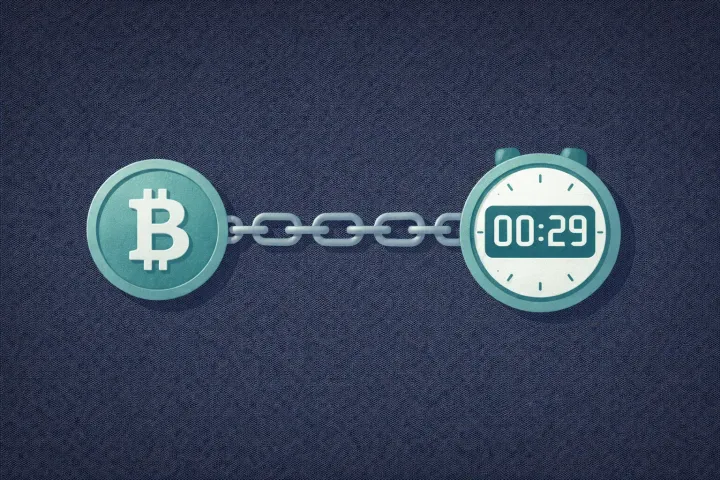
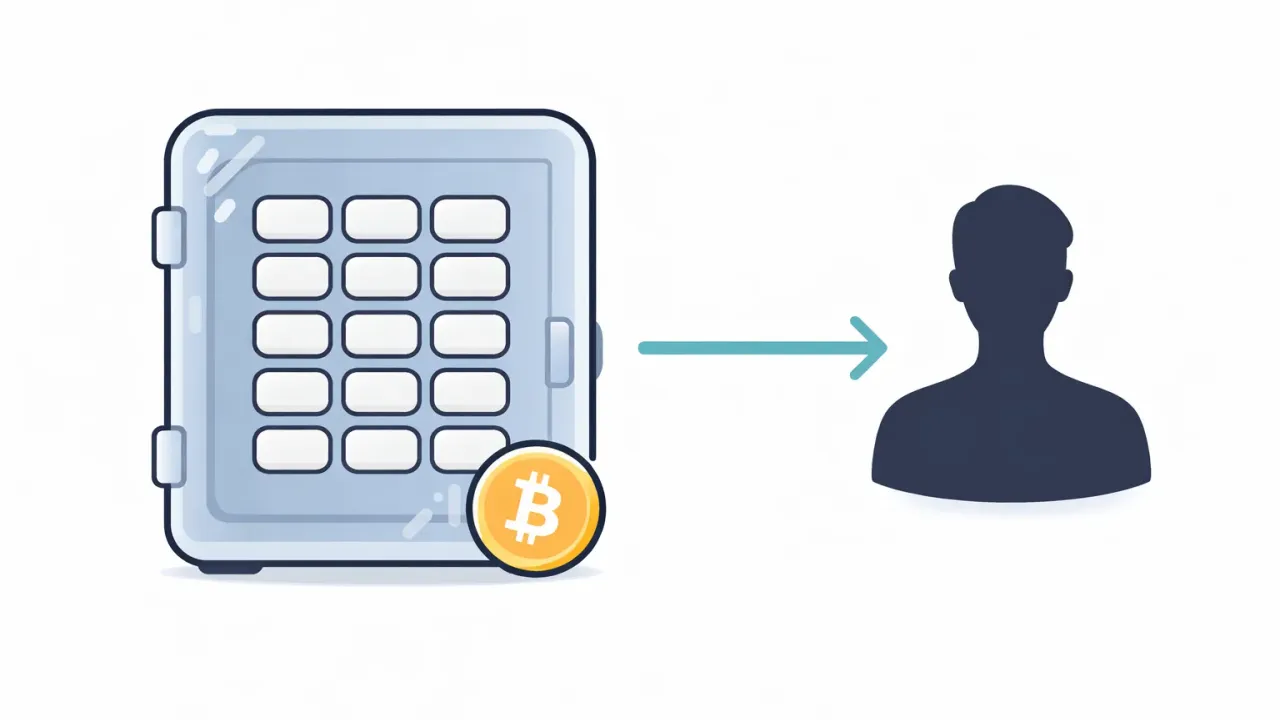
The dead man’s switch concept, originating from fail-safe mechanisms in heavy machinery, maps well to crypto inheritance. Store your seed phrases in an encrypted vault. If you can’t respond, the vault opens for a designated person. If you’re fine, it stays locked.
Most dead man’s switch apps work through check-ins. The app pings you on a schedule (daily, weekly, custom). Miss the window, and it assumes you’re incapacitated and starts delivery to your recipients.
For general password sharing, a false trigger is annoying. For crypto seed phrases, it’s a disaster. If a check-in system releases your seed phrase because you were backpacking with no cell service for two weeks, recovering from surgery, or just forgot to open the app, your heir now has full access to your wallets while you’re perfectly alive. Unlike a password you can change, a compromised seed phrase means creating entirely new wallets and transferring everything.
A 12 or 24-word BIP-39 seed phrase is the wallet. There is no provider to call, no override, no court order that re-opens an address. If everyone who knows the phrase forgets it or dies, the coins are mathematically unreachable.
The root issue: check-in systems treat silence as incapacity. But people go silent all the time for normal reasons. When the thing being protected is a seed phrase worth tens or hundreds of thousands of dollars, the tolerance for false triggers has to be zero.
The AbsentKey approach
AbsentKey works differently. Instead of pinging you on a schedule, it uses a request-based model with per-recipient waiting times.
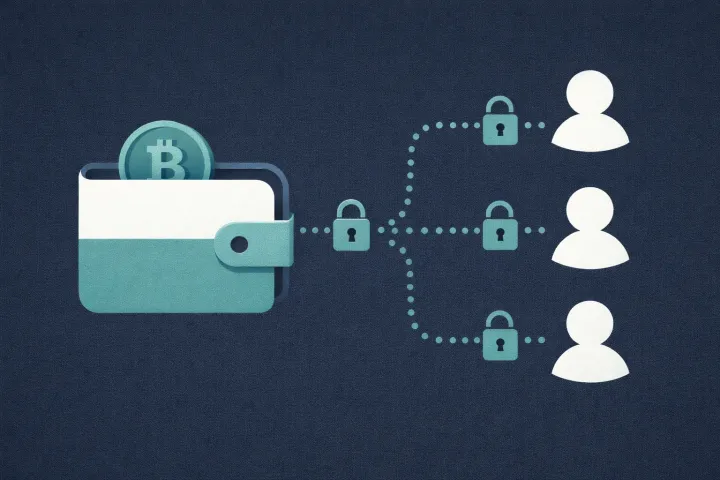
For crypto inheritance, it looks like this: you store your seed phrase (and any other crypto credentials) as a secret in AbsentKey’s encrypted vault. You add your heir as a recipient and set a waiting time, say 90 days. Setup done.
Nothing happens until your heir actively requests access. When they do, you get a push notification. You can approve immediately, deny it, or just do nothing. If you don’t respond within the 90-day window, the timer expires and your heir gets access automatically.
There are no check-ins. AbsentKey doesn’t ping you to prove you’re alive. The system sits idle until a recipient makes a request. This kills the false-trigger problem entirely, your seed phrase can’t leak because you missed an email or forgot to open an app.
# Sample seed phrase secret as stored in AbsentKey
title =
“Ledger BTC – primary cold storage”
words =
“abandon ability able about above absent …”
passphrase =
“[optional 25th word]”
recipient =
“spouse@…” → wait
30 days
recipient =
“sibling@…” → wait
180 days
The encryption is zero-knowledge: XSalsa20-Poly1305 for symmetric encryption, X25519 for key exchange, HKDF-SHA256 for key derivation. The server stores encrypted secrets and content keys. AbsentKey cannot decrypt your seed phrases, and stolen server data alone does not supply the private keys needed to read them. The mobile client is source-available on GitHub.
Per-recipient waiting times let you calibrate by relationship. Give your spouse a 30-day window. Give a sibling 180 days for more breathing room. Each recipient gets their own independent timer.
Receiving is free. Your heir doesn’t need a paid subscription. They download the app, accept the invitation, and that’s it.
What to store beyond seed phrases
A seed phrase alone isn’t always enough. Your heir needs context to actually do something useful with your crypto.
Seed phrases are the obvious starting point. Include every wallet you use, hardware (Ledger, Trezor), software (MetaMask, Phantom, Trust Wallet), and any paper wallets. Label each one with the wallet name and which chains it covers.
Exchange logins for Coinbase, Kraken, Binance, wherever you hold crypto. Email, password, 2FA backup codes. Exchanges are technically recoverable with a death certificate, but that process drags on for months and isn’t guaranteed.
Hardware wallet PINs. The PIN is separate from the seed phrase. Your heir can recover without it, but the PIN makes things faster.
2FA backup codes for exchanges and DeFi front-ends. If you use Google Authenticator, Authy, or a YubiKey, your heir won’t have your 2FA device. Those backup codes from initial setup are the only fallback.
DeFi protocol instructions, often the missing piece. Funds in Aave, Lido, or Uniswap LP positions? A seed phrase won’t tell your heir what to do with them. Something like: “I have approximately 2 ETH staked in Lido on Ethereum mainnet. Connect the MetaMask wallet to lido.fi and initiate a withdrawal.” That single note can save weeks of confusion.
A plain-language overview tying it all together. List what you hold, roughly how much, and where. Give your heir a map before they start opening individual secrets.
A step-by-step crypto inheritance plan
Here’s a concrete walkthrough using AbsentKey.
Step 1: Inventory everything. Open every wallet and exchange account. Write down the name, what’s in it, and roughly how much. Don’t skip small balances.
Step 2: Gather credentials. For each wallet, find the seed phrase. For each exchange, get the login email, password, and 2FA backup codes. For hardware wallets, note the PIN. For DeFi, write down which protocols, which chains, and the basic withdrawal steps.
Step 3: Download AbsentKey and create your vault. Install from the App Store or Google Play and create your account. Encryption keys are generated on your device during setup.
Step 4: Add your secrets. Create a separate secret for each credential, one for the Ledger seed phrase, one for the Coinbase login, one for DeFi instructions, one for the overview. Keeping them separate means you can share different items with different people if needed.
Step 5: Invite your heir. Add them as a recipient on each secret and pick a waiting time. 90 days works for most people. Health concerns? 30 to 60 days might make more sense. Pure precaution? 180 days gives you a wide margin.
Step 6: Have the conversation. Easy to skip, hard to overstate. Your heir needs to know AbsentKey exists and that they should request access if something happens. They don’t need to know what’s inside.
Step 7: Review every six months. Crypto portfolios shift. Set a reminder. Updating takes ten minutes when things are calm. Reconstructing everything after the fact is nearly impossible.
FAQ
What if my heir requests access while I’m alive?
You’ll get a push notification the moment they do. Tap “deny” and they’re locked out. If they try again, the same thing happens. The waiting time only counts down if you don’t respond at all, a single tap resets everything.
Can I share different secrets with different people?
Yes. Each secret can have different recipients with different waiting times. You could share exchange logins with your spouse on a 30-day timer and seed phrases with a more technical family member on 90 days. Or give the same person everything. It’s per-secret, per-recipient, you decide who sees what and when.
What if AbsentKey shuts down?
The mobile client is source-available on GitHub, so the encryption and data format are publicly documented. Your secrets are encrypted on your device before reaching AbsentKey’s servers. That said (and this applies to any service like this), your seed phrase on paper or metal should remain your primary backup. Think of AbsentKey as the delivery mechanism, not the only copy.
Is this better than Shamir’s Secret Sharing?
Different tools for different situations. Shamir’s splits a secret into parts where a threshold (say 3 of 5) can reconstruct the original. The tradeoff: your heirs need to coordinate, each part-holder has to participate, and setup is complex enough that most non-technical people won’t finish it. AbsentKey is simpler, one vault, one recipient, one waiting time. If you value straightforwardness over cryptographic decentralization, it’s the more practical option.
Don’t put this off
Here’s the uncomfortable math. If you hold $10,000 in crypto and die without an inheritance plan, that money is gone. Not frozen, not delayed, not stuck in probate. Gone. No amount of legal work brings it back.
Setting this up takes less than 30 minutes. Gathering your seed phrases and credentials is the longest part, and you should be doing that anyway for your own records.
AbsentKey is free to download, and receiving is free for your heir. Premium runs $1.99/month or $19.99/year, roughly one failed Ethereum transaction, to make sure your entire portfolio doesn’t vanish.
The worst crypto inheritance plan is the one you keep meaning to set up. Download the app, add your seed phrases, tell your heir. Then forget about it until your six-month review.