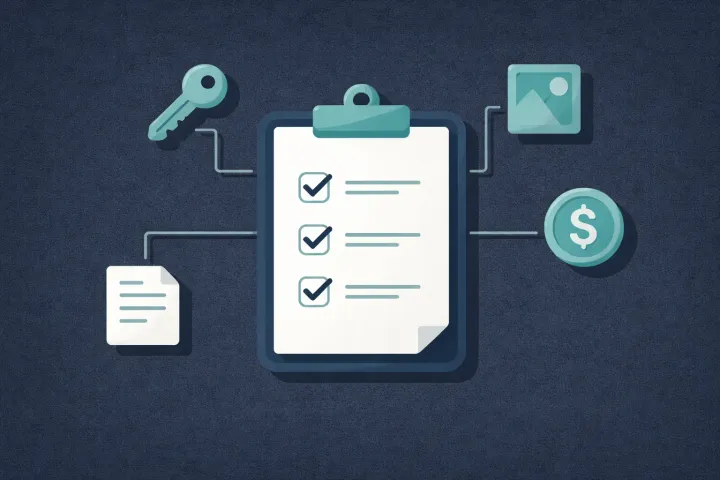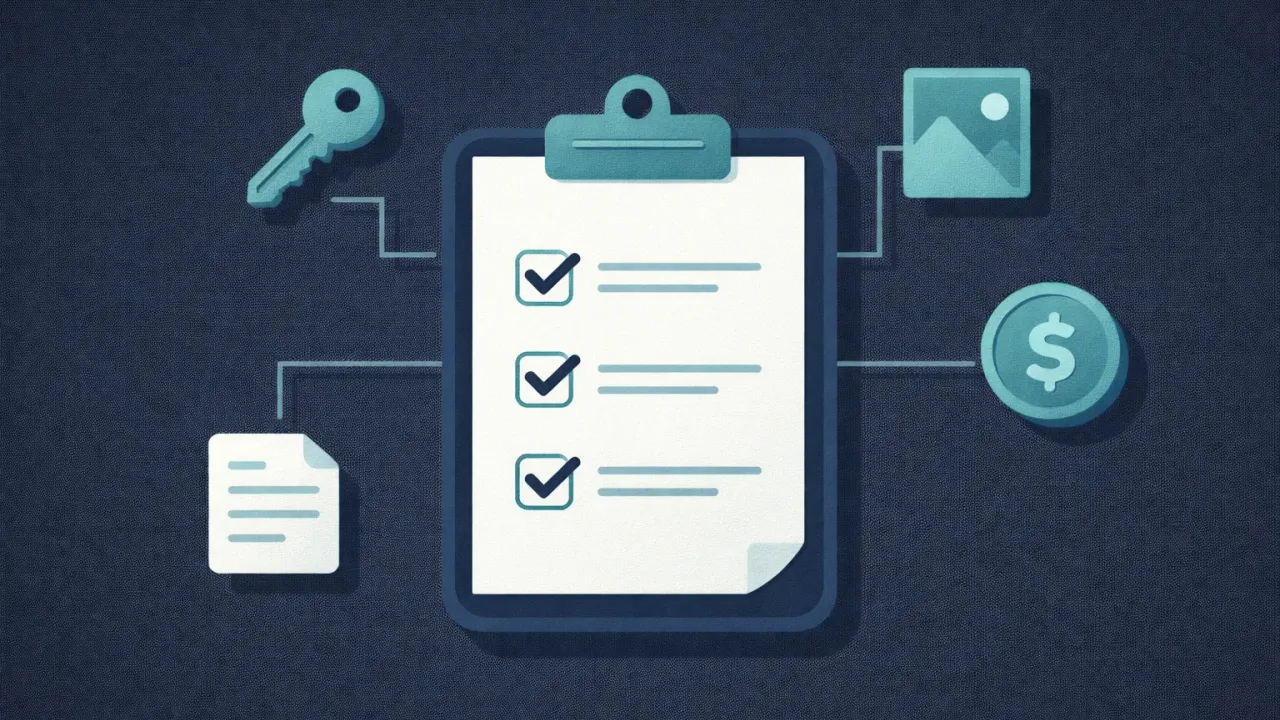
You probably have 100+ online accounts. Your family can access zero of them. A digital legacy plan fixes that in about an hour. Inventory, assign, set timers, tell someone. Done.
The Problem You’re Probably Ignoring
The average person has somewhere between 70 and 100 password-protected online accounts. Some researchers put the number closer to 170. Email, banking, social media, streaming, cloud storage, crypto exchanges, utility portals, insurance logins, medical records, subscriptions you forgot about. Every single one locked behind a password that lives in your head, or in a password manager nobody else can open.
This isn’t hypothetical. Right now, thousands of families are locked out of accounts they desperately need. A spouse who can’t access the mortgage portal. An adult child who can’t find the life insurance policy. A business partner shut out of the shared hosting account. The person who had the passwords is gone, and everything digital went with them.
The fix takes about an hour if you do it methodically, and you only have to do it once. Here’s how.
What Is a Digital Legacy?
Your digital legacy is everything digital that someone else might need to deal with if you’re incapacitated or gone. That includes the obvious stuff, bank logins, email passwords, but also things people tend to forget:
Cloud storage accounts where years of family photos might be the only copy. Cryptocurrency wallets and exchange accounts. Subscriptions and recurring payments that keep billing indefinitely. Social media profiles someone will need to memorialize or close. Work accounts your employer or business partner might need. Your smart home setup, because someone still needs to unlock the front door. And 2FA recovery codes, without which even the right password is useless.
Unless you’ve made a specific plan for your digital legacy, none of it is accessible to anyone but you.
Why Most People Don’t Plan
People skip this for three reasons, and they all make sense on the surface.
It feels morbid. Nobody wants to sit down and think about what happens after they die. But this isn’t only about death, it’s about any scenario where you can’t log in yourself. A serious illness, a prolonged hospital stay, an accident that leaves you unreachable for weeks. These happen to ordinary people all the time.
Your family will be grieving a scavenger hunt through customer support is the last thing they need.
It feels far away. You’re healthy, you’re young enough, it’s not urgent. But the best time to set this up is when you don’t need it. Trying to organize your digital life from a hospital bed is a different experience entirely.
People assume their family will figure it out. They won’t. Banks don’t hand over access just because you’re next of kin. Neither does Google, Apple, or Coinbase. Each platform has its own procedures, most involving death certificates, lawyers, weeks of waiting, and no guarantee of success. Google’s Inactive Account Manager waits 3 to 18 months before doing anything. Apple requires a death certificate and an access key that had to be set up in advance. Most other services have no legacy access process at all.
Your family will be grieving, stressed, and overwhelmed. A months-long scavenger hunt through customer support departments is the last thing they need.
Step 1: Inventory Your Digital Life
Before you can share access, you need to know what you have. Go through these categories and list your accounts. You don’t need every password yet, just the inventory.
Email accounts. The single most important category. Email is the skeleton key: most accounts use it for password resets, so if someone can get into your primary email, they can recover access to dozens of other services.
Financial accounts. Online banking, credit cards, mortgage servicer, retirement accounts, HSA/FSA portals, tax filing, Venmo, PayPal, Zelle. Anywhere money lives or moves.
Cryptocurrency. Exchange accounts, hardware wallet PINs, software wallet passwords, seed phrases. This is the highest-stakes category. Without the keys, crypto is mathematically impossible to recover. Not difficult, impossible.
Cloud storage and photos. Google Drive, iCloud, Dropbox, OneDrive. If your family photos live primarily here and nobody else has access, those memories are on a deletion timer once the account goes inactive.
Subscriptions. Streaming, software, domain registrars, web hosting, gym memberships. These keep billing your credit card until someone cancels them.
Social media. Facebook, Instagram, Twitter/X, LinkedIn. Someone will need to memorialize or close these.
Work and business accounts. Cloud infrastructure, shared drives, CRM, accounting software. If you have a business partner, these credentials become operationally necessary the moment you’re unavailable.
Smart home devices. Wi-Fi password, smart lock codes, security cameras, thermostat. Easy to overlook, but someone needs to get into the house.
Two-factor authentication. Backup codes and recovery keys for your authenticator app. Even if your family has every password, 2FA stops them cold without the second factor. This is the silent killer of otherwise good plans.
Start with the accounts that would cause the most immediate damage: primary email, bank, and anything that controls money. For a more detailed breakdown, see our digital estate planning checklist.
Step 2: Decide Who Gets What
A spouse needs financial accounts and email. Adult children may only need cloud storage and social media. A business partner needs shared SaaS, not your personal inbox. Dumping everything on one person creates a burden no one can carry.
Not everyone needs access to everything. Think about this the way you’d think about a will, who actually needs what, and when?
A spouse or partner probably needs financial accounts, insurance portals, the mortgage login, and primary email. They’re handling day-to-day logistics immediately.
Adult children might need cloud storage (family photos) and social media access (to memorialize accounts). They probably don’t need your bank login or work credentials.
A business partner needs the shared business accounts: AWS keys, company email admin, accounting software, domain registrar. Not your personal email or Netflix password.
Your parents might just need a note with your wishes and a few key contacts. They’re probably not managing your AWS infrastructure.
The point is to be intentional. Dumping everything on one person creates a burden. Giving the right access to the right people makes their job manageable.
Timing matters too. Your spouse might need the bank login within a week. Your sibling might not need anything for a month. This becomes relevant when you choose your method.
Step 3: Choose Your Method
Three main approaches, each with real tradeoffs.
Paper in a safe. Write everything down, seal it in an envelope, put it in a fireproof safe or leave it with your attorney. Simple, and it can’t be hacked remotely. But passwords change constantly, and you won’t update the paper every time. Whoever has access to the safe has access to everything right now, no control over timing. And if you have 80+ accounts, maintaining a paper list is tedious enough that most people abandon it within a year.
Paper works if you have a small number of accounts that rarely change and only one person needs access.
Password manager shared vault. If you already use 1Password, Bitwarden, or LastPass, most offer some form of emergency access. Better than paper because it stays current as you update passwords. But emergency access is a secondary feature in these products, not the main focus. Setup is often confusing, your recipient usually needs their own paid account, and the receiving experience is an afterthought. 1Password doesn’t even have in-app emergency access, they give you a PDF to print. Bitwarden requires both people to have premium accounts. NordPass locks the waiting period at 7 days with no way to change it.
Works best if both you and your recipient already use the same manager.
Dedicated digital legacy tools. A newer category built specifically for this problem.
Cipherwill is a web-based platform for storing digital assets and designating beneficiaries. It’s encrypted and well-organized. The catch: it uses a heartbeat model where you check in periodically to prove you’re alive. Miss a check-in because you’re traveling or in the hospital, and the system can trigger prematurely. That ongoing maintenance is the biggest friction point.
AbsentKey works differently. You store secrets (passwords, files, notes) and assign each one to a specific person. For each person, you set a waiting time, 1 day to 365 days. Nothing happens until someone actually requests access. When they do, you get notified. You can approve instantly, deny, or just ignore it. If you don’t respond within your set time, they get access automatically. No check-ins, no heartbeat, no daily pings. The system sits quietly until someone needs it.
A few specifics: receiving is always free, so your family doesn’t need paid accounts. The waiting time is per person, so your spouse might have a 7-day window while your business partner has 30 days. It handles files too, not just text passwords. Secrets are end-to-end encrypted with XSalsa20-Poly1305 and X25519, and the mobile client is source-available on GitHub. Runs on iOS and Android. Premium is $1.99/month or $19.99/year.
The right choice depends on your situation. Five accounts and a spouse who lives with you? Paper might be fine. Already deep into a password manager ecosystem? Use its emergency features. Want per-person access control without check-in nags? A dedicated tool makes sense.
Step 4: Set It Up and Forget It
The best digital legacy plan is one you don’t have to maintain. If your tool requires daily or weekly check-ins, you’ll use it for a few months, get annoyed, and stop. Then you’re back to square one, with a false sense of security on top.
That’s the core tradeoff between heartbeat-based and request-based tools. Heartbeat tools need you to keep proving you’re alive. The cadence varies, but the problem doesn’t: it’s recurring work for a scenario that hopefully never happens. People are bad at maintaining things that don’t give them immediate value.
Request-based tools (AbsentKey uses this model) flip it. Nothing runs in the background. The system activates only when someone submits a request. You revisit it when something changes, a new account, a new password, a new person to include.
Set it up once, during a calm afternoon. Add the accounts that matter most. Assign them to the right people. Close the app.
Step 5: Tell Someone
This is the step people skip, and it makes everything else pointless.
A sealed envelope in a safe doesn’t help if your spouse doesn’t know it exists. A perfectly configured vault doesn’t help if your family doesn’t know to request access.
# keep it short
→ “I set up a plan for my digital accounts.”
→ “If you ever need access, open AbsentKey.”
→ “Request access. The timer handles the rest.”
# priority order
→ email first → most resets route through it
→ banking next → bills keep coming
→ crypto last → no other recovery path
No dramatic conversation needed. Just tell the relevant people three things: you’ve set up a plan for your digital accounts, what tool or method you used, and what to do if they ever need access.
If you’re using a request-based tool like AbsentKey, the instructions are short: download the app, open it, request access. They’ll either get approved or the timer handles it. For paper, tell them where the safe is and how to open it. For a password manager, make sure they know which one and how the emergency access works.
Give them a priority too. “If something happens to me, get into my email first. From there you can reset most other accounts.” That kind of practical direction saves a lot of confusion.
One more thing, if you’re married or in a partnership, consider doing this together. Both of you set up your digital legacies at the same time. It normalizes the conversation and means you’re both covered.
FAQ
Do I need a lawyer to prepare my digital legacy?
No. A digital legacy plan isn’t a legal document, it’s a practical arrangement for making sure the right people can access the right accounts. It sits alongside your legal will, not inside it. In fact, putting passwords in your will is a bad idea: wills become public record after probate, and anyone can request a copy. You don’t want your bank credentials in a public filing. Keep your legal will focused on property and financial assets, and use a separate method for digital access.
What if my passwords change after I set up my plan?
Depends on your method. Paper? You’ll need to update it manually, which most people eventually stop doing. Password manager with emergency access? Your vault stays current as you update passwords, so emergency access automatically reflects changes. A dedicated tool like AbsentKey? You update the secret in the app when the password changes, the recipient always gets the latest version when they request access.
What about accounts with two-factor authentication?
2FA breaks otherwise good plans. Even if someone has your password, they’ll get stopped at the second factor without your phone or authenticator app. The fix: include your 2FA backup codes alongside the account password in whatever tool you’re using. Most services generate backup codes when you enable 2FA, one-time-use codes that bypass the authenticator. Store them with the corresponding account credentials. If you use an authenticator app that supports cloud backup (like Authy), include those login details too.
You’ve probably thought about this at least once. Maybe after hearing about someone’s family getting locked out. Maybe after a health scare. Maybe just in passing. The difference between thinking about it and doing it is about an hour.
Start with the three accounts that would cause the most problems if nobody could reach them. For most people: email, banking, and whatever holds their most important files. Get those covered first. Add the rest when you have time.
If you want a tool that handles per-person access, doesn’t require check-ins, and lets your recipients use it for free, AbsentKey was built for this. Download it here and start with the accounts that matter most.